
Dog donates life-saving blood at Iowa State Veterinary Bank
4/1/2026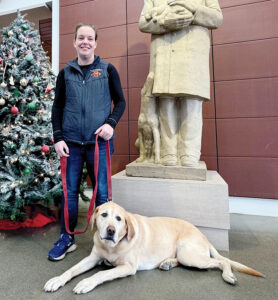 Animals, like humans, can suffer blood loss from injuries, illnesses or surgeries. Humans can rely on a blood bank for a life-saving transfusion. But what about animals?
They, too, have a blood bank. One furry client, Sig, has been a regular blood donor for the past three years.
Sig’s owner, Theresa Beachler, is a theriogenologist at the Iowa State University College of Veterinary Medicine.
Beachler learned about the blood donor program at ISU, which looks for “friendly and willing” dogs to donate blood.
The ISU Veterinary Blood Bank first screened Sig, a yellow Labrador, to ensure he was healthy, free of infectious diseases and up to date on his vaccinations. His blood type was tested, as DEA-negative is considered a universal blood donor. Dogs must meet other criteria, such as weighing at least 50 pounds, being 1-5 years old, spayed or neutered and never having had a previous blood transfusion. They also need a calm, social disposition.



When Sig arrives at the veterinary medicine office, he refrains from eating breakfast. Specialists insert a catheter in his vein and draw blood, a process that usually takes about 20-30 minutes. Some animals require mild sedation, but Sig comes in ready to donate.
“If I hold him and he gets a few good belly rubs, he’s good to go,” Beachler said.
Once the sample is collected, Sig gets a meal or treat.
“It’s just like us. We get a cookie after donating blood,” Beachler said. He stays for a while afterward to make sure he is feeling well-rested and that his vitals are normal.
Sig donates 450 grams, about a pint, of blood each time. After three years of donating, he recently reached the one-gallon mark, a notable accomplishment.
 However, as Sig has aged, he can no longer donate. At 9 years old, he recently “aged out” and attended a ceremony honoring his contributions.
“We’re proud of him for what he could do in the program,” Beachler said.
Beachler, a lifelong animal lover, grew up with dogs and horses. Her mother, a children’s physical therapist, often used horseback riding as therapy.
“Having animals around was enriching and stimulated my desire to be a veterinarian,” she said.
As a theriogenologist, Beachler helps animals, mostly horses, with reproductive needs.
“I love helping clients achieve their goals and dreams with their racehorses,” she said.
Sig has a 1-year-old Labrador sibling at home, Striker. The two animals are close companions.
Taking the time to have her dog donate blood is important to Beachler.
“It’s one of those things that if your own animal needs it, it’s there for them. They help the community help each other and those animals in need,” she said.