Des Moines butcher shops connect Iowa farms to the table
9/2/2026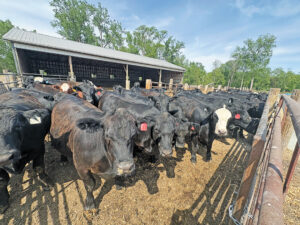
Cattle that are raised for Maxwell Custom Beefs. A customer can 100% customize their beef with Maxwell Custom Beefs. Photo courtesy Tucker Maxwell
Some days they are accountants. On other days, they are recipe developers. One hour, they are marinating meat. And the next, they are in a marketing meeting. Through all their roles, they are always the consumer’s liaison.
For years, Des Moines didn’t need someone to bridge the gap between Iowa farmers and residents, but the COVID-19 pandemic changed that.
Calvin Schnucker, the owner of The Good Butcher, believes the pandemic inspired people to cook at home and care about what they were putting on their dinner plates for themselves and their families.
Tucker Maxwell, owner of Maxwell Custom Beefs, agrees.
“Stuck at home and cooped up, people started researching what was in their foods and how they can eat healthier, save money and support local businesses,” Maxwell said.
“When they want to cook for themselves, they want to do it well,” Schnucker said. “So that’s what we’re providing. If you want to put the best on your table, you come in and get it from us.”
Schnucker can tell you exactly where his meats came from.
So can Maxwell.
The same is true of Nick Lenters, owner of Old Station Craft Meats.
“Before COVID-19, Des Moines didn’t have the same level of demand for locally owned butcher shops as other cities such as Minneapolis, Chicago or New York. There were other pipelines for getting a quarter, half or whole beef in Iowa through established connections with farmers and Iowa’s meat locker system,” Schnucker said.
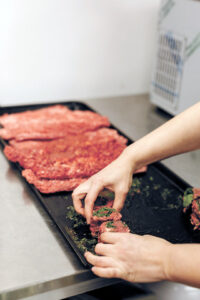
Meat that is being prepared for sale at Old Station Craft Meats. Photo courtesy Nick Lenters
Although many small towns still have meat lockers with connections to local farmers, the Des Moines metro lacks that system. The effects of the pandemic, the rise of the farm-to table-movement and social media created a demand for butcher shops in Des Moines to bridge this gap.
Since the pandemic, five butcher shops have opened: Old Station Craft Meats (2020), Fareway Meat Market (2022), The Good Butcher (2024), Maxwell Custom Beef (2025) and Cerro Grande Meat Market, which just opened this July.
Social trends have played a significant role in the popularity of butcher shops. From the resurfacing of the farm-to-table movement and people’s interest in where their food comes from to the recent, widespread use of GLP-1 medications, people are paying more attention to the ingredients in their daily diets, especially protein.
“Business is picking up for independent butcher shops,” Lenters said. “To me that signals that consumers increasingly view meat as something worth buying from people who specialize in it rather than treating it as just another grocery item.”
Butcher shops are here to build the connection between Iowa farmers and Iowans.
The farm-to-table movement, which started in the 1970s, encourages people to connect with and buy from their local farmers and food producers.
“While technological advancements in agriculture and food production have provided many benefits, not everyone agrees on how those technologies should be used,” Lenters said. “By sourcing food locally, consumers gain more transparency into the production process and can make informed decisions about the products they choose to feed their families.”
The movement doesn’t deem one method of farming right or wrong but aims to shorten the distance it takes for the food to get from the farm to the consumer’s table, while trying to connect people with their communities and farmers along the way.
This allows people to ask questions and become educated about what they’re eating and also gives them the opportunity to choose producers that align with their values.
“Quality means different things to different people. Some consumers prioritize local sourcing, others care about animal welfare, production practices, flavor, freshness or how the food was raised and processed,” Lenters said. “Buying directly from farmers or from a butcher who works closely with farmers gives consumers more options and more information to make those choices.”
Maxwell Custom Beefs has a network of 115 central Iowa farmers. The consumer, when buying an eighth, quarter, half or whole beef, can decide the size, genetics, feed, GMO and what portions of the animal they want, making it 100% customizable. Going local can be more costly, but Maxwell is able to walk his customers through everything they need to know, he said.
Maxwell describes Maxwell Custom Beefs as a marketplace, connecting people with the farmers. While he prioritizes cattle, he has a network of chicken growers who raise and slaughter the chickens themselves. He also does lamb, goat, pig and deer processing in the fall and winter. A customer can also buy rib-eye, New York strips, ground beef, pork chops and little rib-eye sandwiches from the shop.
For Schnucker, being a butcher means getting customers the best meat and sourcing possible. All of The Good Butcher’s processed beef, pork, chicken, lamb, bison and elk comes from local farmers and meat companies. They sell turkeys for Thanksgiving, marinated meats, side dishes and process deer for people who bring them in.
Schnucker purchases whole animals and locks in the lowest price he will pay the farmers for a year. So even if the price of beef goes down, Schnucker will pay the farmers the price they agreed upon.
“It’s generally above the market because what I want my farmers to know is that I’m going to consistently buy their animals, and I need them to consistently do the best job they can,” he said. “If the market collapses and beef goes back down to $2 a pound, I’m still going to pay them what I think is a fair amount for that beef.”
Schnucker wants to see Iowa have sustainable meat production, and locking in a yearly lowest cost with farmers is one way to do it.
“If we’re all following the market and we’re all chasing the bottom dollar, all that’s doing is squeezing the farmers at the end of the day,” he said.
The farmers raise the animals specifically for The Good Butcher on certain feedstocks, crate and hormone free and with no antibiotics ever for pork. Though it is not required in the state of Iowa, he has his pork raised Proposition 12-compliant, a California state law that prohibits confined enclosures when breeding pigs. Prop 12 requires at least 24 square feet of usable floor space per breeding pig, according to Prop 12 and CDFA standards.
The Good Butcher is a USDA-inspected facility, as is its partner locker, Guthrie County Quality Meats. The locker slaughters the animals for Schnucker, which come to him as whole, chilled carcasses. Beef continues to age for up to 21 days while pork and lamb are cut fresh and displayed in a case.
“We try to have as few steps as possible between the farm and your plate because that allows us more accountability,” Schnucker said.
Schnucker’s goal is to tell a customer which farm the meat came from, on what day, and how it was raised.
When Lenters became a butcher, he pictured himself spending his days cutting meat and developing recipes to help customers create a memorable meal. In the years since he has been operating Old Station Craft Meats, it has been nothing like he imagined.
Lenters started curing his own meat at home in the early 2000s after following craft butcher shops such as Fleishers Craft Butchery in New York and Western Daughters Butcher Shoppe in Denver. These shops showed him that a butcher shop is more than a place to buy meat; it’s where customers can learn their food, how to cook it, and the farmers who grow it. After Lenters’ brother and he entered the cattle business, the obvious next step was to open Old Station Craft Meats.
“It gave us the opportunity to connect local farmers with local consumers while sharing our passion for great meat and helping customers create memorable meals,” Lenters said.
Due to the growth of his business, Lenters’ role has grown from that of butcher and owner to that of marketer, accountant, mechanic and compliance officer.
“At the end of the day, it’s all in service of helping people have great experiences around good food, and that’s still the part I love most,” he said. “The key is listening to what customers want and finding ways to better serve them.”
Lenters said he sources his meat based on quality and consistency, which allows his staff to become experts on their products in order to adequately answer customers’ questions. This transparency is important to Lenters since Old Station Craft Meats makes their own bacon, ham, jerky, snack sticks, sausages, deli meats and more. This is how they differentiate themselves.
“If a customer asks whether a product contains a particular ingredient, how it was prepared, or how fresh it is, they’re often talking directly to the person who made it or someone who works alongside the people who did,” he said.
Being a butcher in Des Moines means connecting the community with hardworking farmers to ensure that the best meats end up on Iowans’ dinner plates. A butcher is the link between the farmer and the consumer, and according to Lenters, a reputable one can tell their customers where the meat is from and how it was raised while helping them through the purchasing process.
In the last year, the price of beef has risen for the average consumer. Market price is almost $4 a pound more than what it was last year, Maxwell said. Despite the increase of middle market beef, premium beef prices for The Good Butcher have remained the same. Schnucker views The Good Butcher as a specialty shop and isn’t trying to compete with big grocery companies such as Hy-Vee.
The Good Butcher represents the extra spend.
Schnucker said 20,000 people walk into a Hy-Vee every day, and each store has to have something available for shoppers to buy.
“That’s not the game we’re playing. We’re trying to have the best quality,” he said. “It’s going to be better because we’re buying less of it, and we’re very specific about who and how we’re buying it.”
The Good Butcher and Old Station Craft Meats have seen growth in sales of chicken over the past year. Schnucker sources his pasture-raised chicken from a group of farmers in Marion County, while Lenters chooses to look outside of the state to get the air-chilled chicken, chilled in a water bath, that he wants.
“Consumers seem to be diversifying their protein choices when looking for convenient, protein-rich foods,” Lenters said. “Which is why he believes poultry has become increasingly popular.”
Recently, Maxwell has seen a pushback on bigger carcass animals, which big companies try to produce due to the big emphasis on production. When animals are grown bigger, it leads to more waste. He thinks animals are going to start being grown at a more manageable size, which in turn will make them a better, more affordable product for the consumer.
And Maxwell believes there will be great opportunity for younger generations, especially those who grew up with the effects of the pandemic, as current business owners retire, to open and operate their own butcher shops.
“I think it’s going to be a good opportunity for young people to create their own brand and really modernize an industry that’s been so stuck in its ways for so long,” Maxwell said.
Being a butcher for the community of Des Moines is more than just selling meat.
“You can grow up and live in Iowa your whole life and never actually be on a farm, so what we’re doing is trying to bridge that divide,” Schnucker said.
The butchers of Des Moines want to provide their customers with the best quality of meat, answer their questions and maybe give a little cooking advice, if it’s needed. ♦