
The haunted birdhouse and Iowa’s bird lady
4/1/2026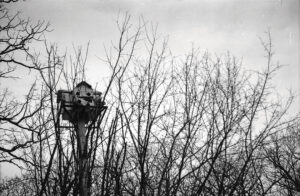
The “Haunted Birdhouse” in Greenwood Park. Photo by Kristian Day
At least twice a week, my morning walks take me through Greenwood Park along the dirt trails that begin on the west side of the Des Moines Art Center parking lot. For the past 15 years, I’ve passed what I call “the haunted birdhouse.” Perched atop a 10-foot pole, it looks like a battered multifamily dwelling, scarred by tornadoes, thunderstorms and blizzards. It still stands. Not far away, just 4 feet off the ground, are several bluebird houses. Signs on each read: “Please do not disturb this bluebird nesting box. This box is providing nesting habitat for bluebirds in Des Moines parks. This box is monitored weekly during nesting season by volunteers to keep house sparrows from nesting.”
Gladys Black wrote about Iowa’s birds for The Des Moines Register from the 1960s until 1987. An eccentric conservationist, she bridged scientific concerns and public opinion, helping shape support for wildlife protection and responsible land use.
Born in Pleasantville in 1909, Gladys could identify 25 bird species by age 7. She studied nursing at a time when few women pursued higher education. She moved to Georgia with her husband, Wayne, who was stationed at Robins Air Force Base. After his death in the late 1950s, she returned to care for her ailing mother and stayed in Pleasantville after her mother passed.
Gladys lived alone — sort of. She kept a few hawks and a snowy owl and was a certified bird bander, tracking bird migration by placing numbered bands on their legs.
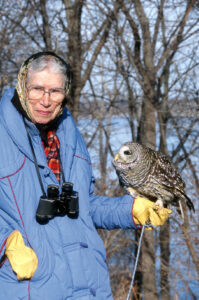
Gladys Black photo by Larry Stone
Her column, which began in 1969, gave ordinary birds personalities and brought conservation issues to the public. She feuded with Pulitzer Prize-winning cartoonist and conservationist Ding Darling over whether conservation should come from the community or political institutions. In the 1970s, she raised alarms about pesticides poisoning waterways, prompting passionate letters from readers, some of whom received published replies starting with “Dear Smart Alec” or “Sir Bonehead.”
For decades, Black lobbied the state capitol in Des Moines to stop lawmakers from creating a hunting season for mourning doves and crows, arguing there was no good reason to hunt them for sport. The legislature did not approve it until years after her death.
Over the winter, I read about Gladys, picking up her second book, “Iowa Birdlife,” and the biography “Gladys Black: The Legacy of Iowa’s Bird Lady” by Larry Stone and Jon Stravers. Her writing, much of it collected from her Register columns, warned readers about Iowa’s land and waterways long before environmental concerns became mainstream.
Spring is here. Whether conserving water, planting a pollinator garden or building a haunted birdhouse, we can all follow her lead. n
Kristian Day is a filmmaker and writer based in Des Moines. He also hosts the syndicated Iowa Basement Tapes radio program on 98.9 FM KFMG. Instagram:
@kristianday | Twitter: @kristianmday