
Hope on the Hoof brings therapy and horses together
3/4/2026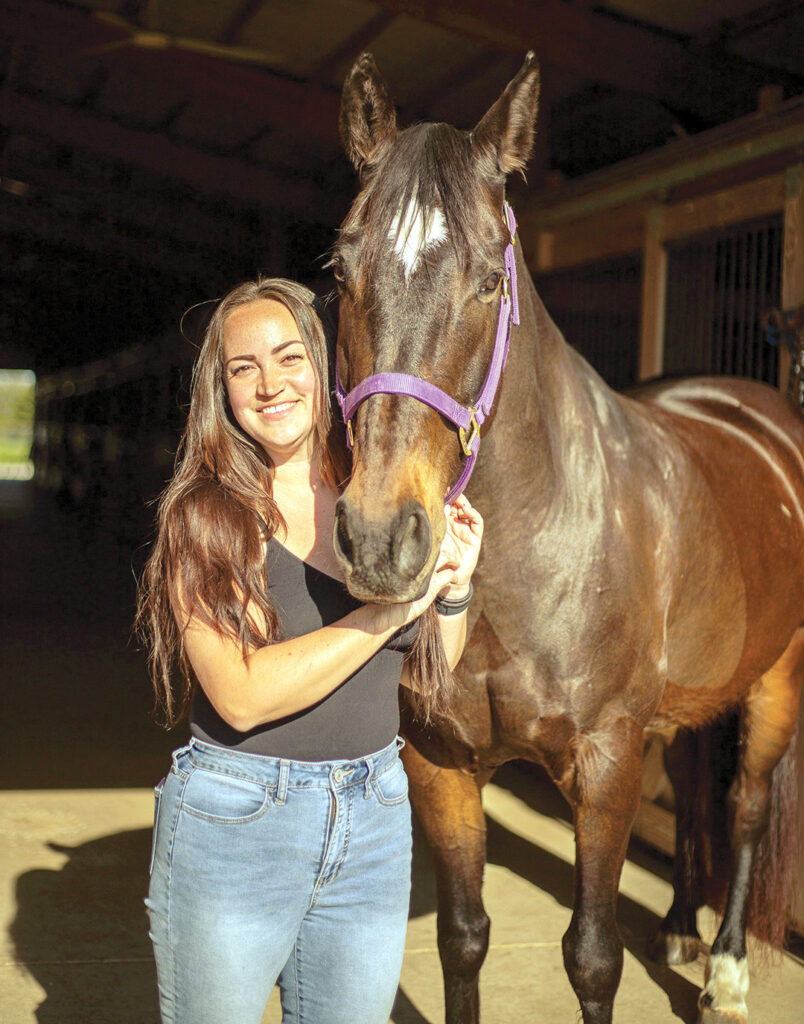
Jacqueline Schimel
What does one think of when imagining a therapy session? Could it be Dr. Melfi and Tony Soprano? The stereotypical therapy chair that is often depicted in other media? Most likely, you imagine a person and a room. That was not Jacqueline Schimel’s vision.
Schimel, an Iowa State and Capella University graduate, took her passion for horses and helping people and paired them with her knowledge of therapy.
“I am a licensed mental health counselor, and I have been doing counseling work and therapy work for the past five years. I’ve always been a horse girl, self-proclaimed. I was maybe a little bit weird when I was younger,” Schimel said.
She originally wanted to study marine biology, but after some struggles, she pivoted to therapy after enjoying psychology classes. But, her love for animals remained the same.
“It wasn’t until my master’s program that I really grew into that passion of helping people and getting that sense that this is where I’m supposed to be,” Schimel said.
That’s when she found out about equine assisted therapy. It was almost like a lightbulb turned on in her head.
“I learned about Equine Assisted Therapy through my program, and I kind of dabbled in it a little bit. I started volunteering here with Jester Park’s veterans programs. And I think just through that experience, I really saw that need for equine assisted therapy and decided to go for certification,” Schimel said.
She then teamed up with Lyne Neymeyer, who leads the Horses Helping Heroes, a program helping military veterans and active duty service members at the Jester Park Equestrian Center.
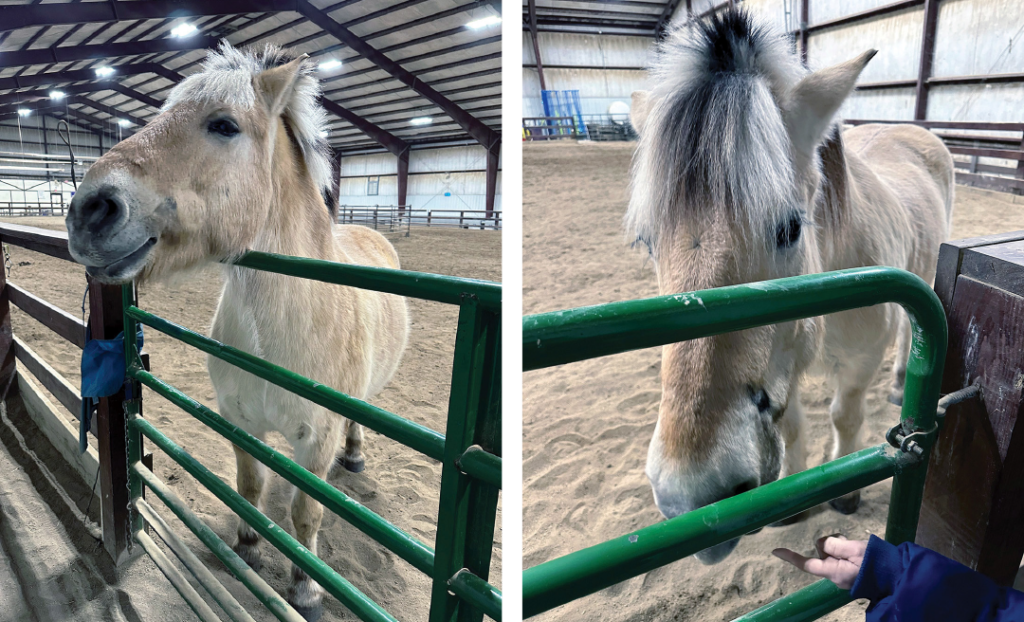
Timone and Pumba
The horses the two work with come in all shapes and sizes, but they are careful in deciding which ones will be best for therapy sessions. The two we were able to see the day of the interview were Timone and Pumba. They are favorites for Schimel.
“There’s a lot of variety and a lot of different personalities, which really helps in matching horse to human. They don’t even necessarily have to be trained to ride, but I’m looking at their demeanor. It’s more of their personality. Are they someone who, if we decide to touch really fast, are they going to freak out more or move fast? These guys have been standing here pretty much the whole time. They are steady eddies, our go-to guys over here who are very patient,” Schimel said.
The equine-assisted therapy program is called Hope on the Hoof. Schimel says they recently passed one year of operation. She is focused on getting the word out about this program, and getting more people in the door. Sessions are open for children, adults and couples alike.
Schimel says when people tell you that a horse can tell when you are scared or anxious, they aren’t joking or telling you that as a means to cool your nerves.
“This sounds made up, but I promise it’s real. Horses can detect our heartbeat up to 4 feet away, and they can actually sync their heart rates with ours as well,” Schimel said. “They only live in the present moment. They’re not worried about the past or the future, and so as we are processing and unloading, and putting it onto them, they can let go of that for us in real time,” Schimel said.
Her hope is that this will continue to a fuel the conversations surrounding mental health services in the state of Iowa.
“In general, there’s a lot of stigma still around mental health. Even though we have come a long way, there’s still a lot further to go. And, in Iowa specifically, we have a lot of mental health needs, part of this is to increase the number of options of therapy,” Schimel said.
Her goal is to be able to offer this service completely free of charge through Open Gates. This makes it possible for people and businesses to donate to the program.
“I would like to get sponsorship and funding to cover the whole year of 2026. We have a little bit built up where, we’ve been able to offer brief services to incoming people, but, ultimately, we are too new for a lot of grants, and so we are looking for those sponsorships and partnerships with the community to help provide that,” Schimel said.
Schimel says people should get involved for a number of reasons.
“I think that everybody could benefit in some way from these services by being around the horses. There’s so much going on in the world, in individual lives, day to day, we don’t have a lot of time to connect with the natural world — with animals, with nature. This just gives people a chance to connect to a different aspect of ourselves,” Schimel said.