
Water wars in the 21st century
3/4/2026Water is the name humans give to the tasteless, odorless chemical bonding of two hydrogen molecules with one of oxygen — H2O. Don’t let its simplicity fool you. It is the molecule that made all life possible on Earth.
Comprising roughly 60% of the human body, water acts as the primary medium for metabolic reactions, transports nutrients and oxygen to cells, and regulates body temperature. It is the main component of blood and lymph, carrying oxygen and nutrients while removing metabolic waste. And, through sweat and respiration, it acts as a coolant to maintain a stable internal temperature.
The brain and heart are 73% water, and the lungs about 83%. The skin contains 64% water; muscles and kidneys 79%, and even our bones are 31% water. Each day, humans must consume a certain amount of water to survive. Of course, this varies, but an adult male needs about 3.2 quarts per day while an adult female needs about 2.3 quarts.
Beyond human health, water is essential for ecosystems, enabling plant growth, photosynthesis and agriculture. Without water, these essential processes would cease.
“Water, water everywhere; nor not a drop to drink.” – Samuel Taylor Coleridge

Without water, there is no living thing, at least nothing known to human ken. The rub is that though approximately 71% of the Earth’s surface is covered by water, the oceans hold about 96.5% of all Earth’s water. While often called the “blue planet,” only 3% of Earth’s total water is freshwater, and of that, only about 0.5% is available for use, with the rest locked in glaciers, ice caps or deep underground.
 Water Wars
With vital water so scarce, its control has been an ancient, watery bone of contention. The Chinese symbol for “political order” is the same as for water. The unspoken truth behind that coincidence is clear — he who controls the water controls the people.
For as long as humans have lived in packs and tribes, river water has been contested between those upstream and downstream. Throughout ancient history, nations and armies have dammed and diverted rivers to undermine enemy fortifications or to flood areas.
Troy was built as if it was intended to withstand the 10-year siege by the Greeks in the “Iliad.” The Trojans utilized a sophisticated water system, including a subterranean, rock-cut tunnel with a cistern, the “Water Cave of Wilusa,” to collect and store freshwater. The city was built by the Aegean Sea, whose coast was much closer to Troy then than it is now, the Scamander River and the numerous hot and cold springs mentioned by Homer. Modern archeological discoveries verify all that Homer wrote about Troy’s water.
All of civilization’s ancient empires were built near sources of water. Ur and Akkadian dynasties that predated the Babylonian Empire sprouted between the Tigres and Euphrates Rivers of Mesopotamia. One of the earliest recorded hostile diversions of water occurred when Cyrus the Great of Persia conquered Babylon. To bypass the city’s massive walls, Cyrus’s engineers diverted the Euphrates River into a nearby basin. This lowered the water level enough for his troops to wade into the city through the dry riverbed under the city gates. Even to this day, the systemic hatred of the Kurdish people developed out of the location of the Kurdish homeland – upriver from the Tigres-Euphrates Valley.
The Tigres-Euphrates basin, from Turkey through Kurdistan, Iraq and Syria to the Persian Gulf, is the mother teat of all civilization. The oldest water war 4,500 years ago was fought between Lagash and Umma.
The Arab League in 1964 diverted the headwaters of the Jordan River to prevent them from flowing into the Sea of Galilee, thwarting Israel’s National Water Carrier project. Israel responded with airstrikes to stop the project, a significant contributing factor to the Six-Day War in 1967. ISIS forces captured several dams on the Euphrates and Tigris Rivers during the Syrian Civil War, using them to either flood downstream areas or cut off water supplies to cities as a tool of coercion.
While the Indus Waters Treaty has historically managed water-sharing between India and Pakistan, tensions arise periodically. In a recent instance, India stalled a key water-sharing treaty as a response to a terrorist attack, highlighting the potential for water to be used as political leverage in conflicts.
China’s upstream dams on the Mekong River during a severe drought led to the lowest river levels ever recorded in Southeast Asia. That has stoked fears that China could manipulate the water supply to millions in downstream nations like Thailand.
During the American Civil War, Union General Ulysses S. Grant attempted several “bayou experiments” to bypass the Confederate stronghold at Vicksburg. Those included the Yazoo Pass Expedition, where Union engineers used explosives to divert Mississippi River into the Yazoo River. They failed as have all subsequent government attempts to “control” the mighty Mississippi.
The lowland Dutch flooded areas and impede German advances in WWII. The Chinese Nationalist government under Chiang Kai-shek destroyed dikes on the Yellow River to halt the advance of Japanese forces. That caused the largest man-made disaster in history, killing up to to 900,000 civilians and displacing millions.
Ag water
The ancient empires that survived long enough to become historic were the ones that created agriculture, which was completely dependent upon fresh water, in the valleys of the Indus, the Nile, the Urubamba and the Yellow rivers.
The manipulation of shared water resources remains a source of international conflict and negotiation. Historically, the life-giving waters of the Nile have been shared better than others, upstream and downstream. Recently, however, the Chinese have manipulated Ethiopia to an extent that it is feared they could cut off the headwaters of the Blue Nile. That would reduce its flow into Sudan and Egypt where rainfall is too sparse to support crops. By the time the White Nile flows into Sudan, more than 75% of its water has evaporated in equatorial heat.
More than 120 million people depend upon Nile waters. As noted above, the Chinese, Nationalist and Communist alike, don’t share water well with others. Water has been political power to them ever since language was invented.
Such water wars undermined the amazing cooperations that have, for the most part, exempted water control from the laws of Consequentialism — the philosophy professing that a good result justifies any means to its end. Though usually ascribed to Machiavelli, its tenet was first expressed 2,000 years earlier by Sophocles in “Elektra,” a play about the consequences of Agamemnon’s return from the events immortalized by Homer.
In post-Colonial America, water wars were won before the losers even realized they were fighting. New York City (NYC) would have been depopulated decades ago were it not for the massive hydroelectric aqueducts that import its water from Catskill, Delaware and Croton watersheds as far as 125 miles away. NYC water is considered one of the best in America. NYC pizza chauvinists believe it makes pies made in NYC superior to those made elsewhere with the same recipe.
Ironically, NYC is surrounded by huge sources of fresh water from the Hudson, East, Harlem and Bronx rivers. But that water has been poisoned for more than 130 years, mostly by industrial dumping upriver.
 Dams and damned dams
Since air conditioning became common, great percentages of Americans have migrated from the northeast and northcentral U.S. states to the southeast and southwest. That trend is accelerating and shows no sign for reversing. It also requires bringing huge quantities of water to deserts.
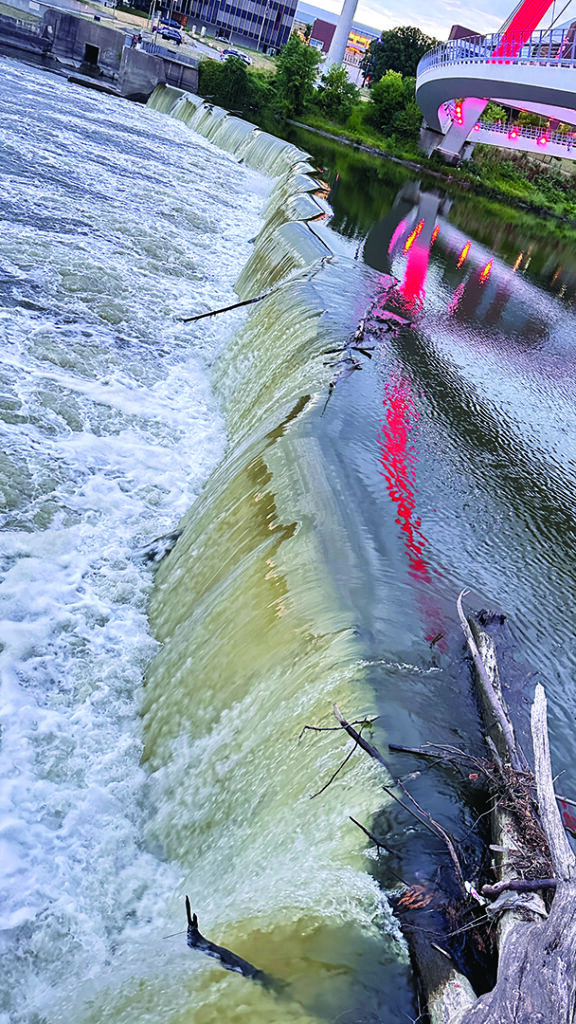
That has led to confrontation over how much water to use for agriculture, for lawns and golf courses, and for power generation. There are 85,000 dams in the U.S. Only 600 were built in the West in the 20th century, yet those are the ones that made people angry. Some are ideal dams that allow water to be stored rather than lost to evaporation. Those allowed Los Angeles, San Diego and Las Vegas to grow up from the desert and for food to be raised to support them. Arid California is now the largest producer of dairy and the fifth-largest producer of vegetables, fruits and nuts in the world.
Then there are damned dams. These trap silt and clog turbines, shutting down power and killing life downstream. They are doomed to short life spans and without constant, expensive maintenance, they become extremely hazardous. The Francis Dam flood of 1927, northeast of L.A., killed 600 and destroyed the career of legendary water commissioner William Mulholland who is credited as “The Builder of Los Angeles.” About 33 dams a year bust, and that number is increasing faster than the number that are being repaired. It costs billions and takes an average of 12 years to repair a major dam.
The difference between good and bad dams is in the eyes of the beholder. One dam is credited with creating environmentalism in America. That was the Hetch Hetchy Dam in a corner of Yosemite Park. It supplies 85% of San Franciso’s world-famous city water with pristine Tuolumne River elixir. It flows from the Sierra Nevada mountains to Modesto, 95 miles from San Francisco at its closest point. It was built in 1912 when San Francisco was desperate to prevent a repeat of the fires resulting from its 1906 earthquake.
Hoover Dam took 112 human lives in its construction. It also turned a Mormon area of desert into “Sin City.” It supplies 4 billion kilowatt hours of electricity, powering 1.2 million homes in three states. Two of those states — Arizona and California — saw it as a water war. Agriculture saw it as a threat. Power companies saw it as unwanted competition. Eastern state politicians saw it a drain of federal money. It took six years to fill Lake Mead while no water reached its natural destination in the mouth of the Colorado River and the Sea of Cortez, and very little water has ever since.
Hoover Dam also created advocates for the Endangered Species Act of 1973, which tied up all dam projects in lawsuits and led to President Carter’s downsizing of the legendary “Water Buffalos” (officially the U.S. Bureau of Reclamation) into insignificance.
Iowa’s water war
“Black-eyed man, he took the blame,
For the poisoning of the well.
They found his shoes by the pulley;
They found his fingerprints all over the pail.”
– Michael Timmons
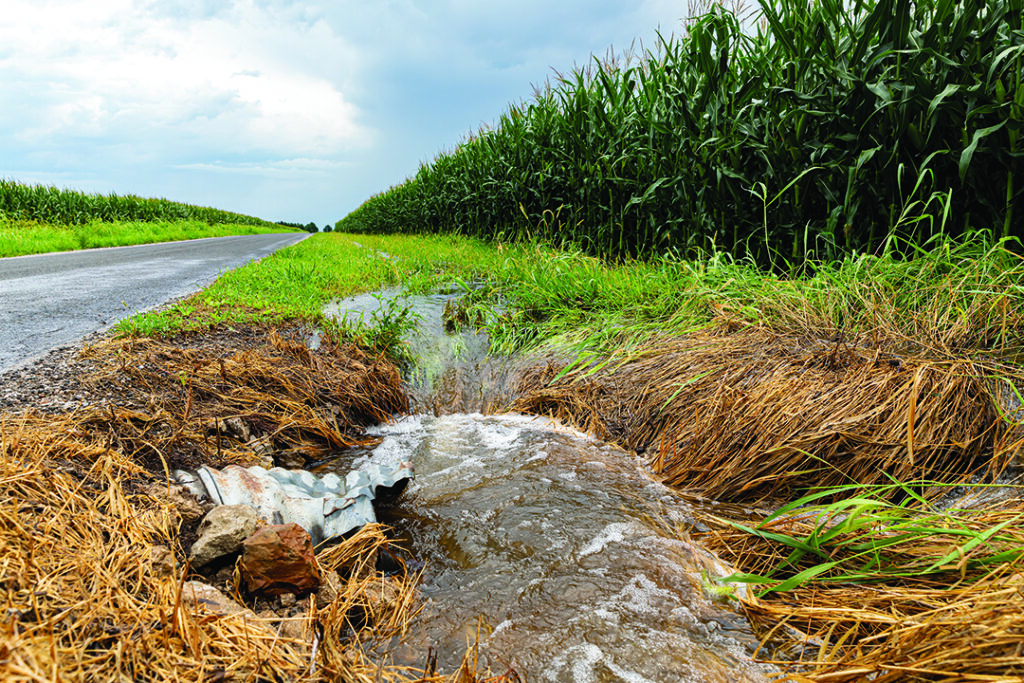
In Iowa, water war is not about damming and diverting the flow of water but poisoning it. This decade, Des Moines suddenly developed alarmingly high rates of new cancers — the second highest in the entire country. Simultaneously, the nitrate levels in Des Moines’ water supply have risen to the highest levels ever.
At the same time, Iowa counties up the Raccoon River from Des Moines have been harvesting the most corn and soybeans, both overall and per acre planted, in America.
Enquiring minds connect the dots and conclude that agriculture is poisoning the figurative well from which Des Moines drinks. Particularly suspicious is the heavy use of glyphosate in Iowa herbicides. Glyphosate is the chemical that made Roundup the king of herbicides and Ankeny’s Denny Albaugh, who cornered the world market on it, the richest man in Iowa.
Glyphosate is an awesome poison. Before a Monsanto scientist discovered it could be an effective weed killer in the 1970s, it was hardly used for anything other than to kill syphilis in humans. And it has been conclusively proven that it produces excess nitrates.
Thousands of lawsuits claim that glyphosate causes cancer, particularly non-Hodgkins lymphoma. They are so daunting that Bayer, who bought Monsanto in 2018, is seriously thinking about ending the use of glyphosate. Bayer is also touting glyphosate’s wonders in an ad campaign, in Missouri and Iowa, that claims it keeps the cost of food down and feeds the world.
(At our press time, Bayer proposed to resolve all claims that its flagship herbicide causes cancer, setting aside more than $7 billion to fund payments over 21 years. The Supreme Court will decide if that is acceptable.)
It has been rumored for decades that Des Moines has the world’s biggest water filtration system to cope with the nitrate runoff in the Raccoon. We asked Tami Madsen, executive director of Central Iowa Water Works, about that.
“The nitrate removal system was once described as the largest in the world; however, it is difficult to determine whether that distinction still applies. With so many types of technology available to remove nitrate, and the number of facilities across the world removing nitrate, it would not be easy to accurately say who has the largest facility.”
So, why do we need that?
“When nitrate levels in raw water sources, including the Raccoon and Des Moines Rivers, rise above 10 mg/L, which is the federal safe drinking water standard, the nitrate removal facility must be operated to remove excess nitrate. This allows our water treatment plants to continue producing water that meets all safe drinking water standards.”
In an ideal world, what kind of legislation would make it easier to keep Des Moines’ water clean and safe?
“Clean, reliable drinking water is the result of thoughtful investment, strong partnerships and a commitment to drinking water today and for future generations. Central Iowa Water Works and our member agencies have several infrastructural, public-private, and upstream/downstream partners, and scaling and strengthening those partnerships is what brings the most impactful change.
“While today CIWW consistently provides drinking water that meets all safe drinking water standards, continued investment in advanced treatment technology, infrastructure upgrades, and long-term planning will enable us to provide ample drinking water for the communities we serve well into the future.”
 Praise the lord and pass the Perrier. ♦
Elite drinking water
High nitrate levels have pushed more central Iowans to buy drinking water. Here are some little-known facts about the elite drinking waters commonly available in Des Moines.
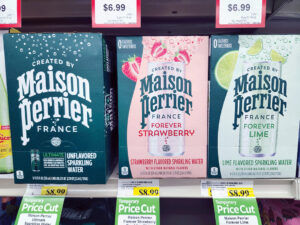
Perrier has been the elite drinking water of the world for more than 50 years. However, Perrier has polluted its brand by introducing the Maison Perrier (MP) line. These products have replaced the real Perrier with a filtered water. The real stuff is sold in distinctive glass bottles. Fittingly, MP is sold in plastic and aluminum.
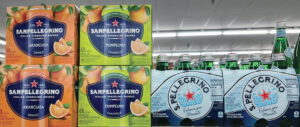 Topo Chico has been Mexico’s elite water since 1895 but is rather new in Iowa. Since being acquired by Coca Cola in 2017, it has also tarnished its brand with a new line called Topol Chico Sparkling Water. It is not made with mineral water from the Topo Chico springs. The real stuff is sold only in glass bottles and is much easier to find in Des Moines than real Perrier.
San Pelligrino has been made with mineral water from the Italian Alps since 1899. Its rather new San Pelligrino Sparkling Drinks are made with real San Pelligrino mineral water. ♦