
Business and industry trends
3/4/2026
Myles Barth and his wife, Katie, own Refill and Chill LLC.
Across retail, food and service industries, a noticeable shift is happening. Consumers are increasingly drawn to small, specialized businesses — places that offer craftsmanship, sustainability, personalization and a sense of connection that mass-produced options often lack.
Think vintage and resale shops. Artisan bakeries. Custom upholstery studios and eco-friendly refill stores.
For business owners, that shift has created both opportunity and challenge. Success now depends not just on what they sell, but how well they understand their niche, adapt to evolving consumer expectations and communicate their value. The following local businesses offer a snapshot of how these trends are playing out for them.

Vintage revival
In Historic Valley Junction, the more antiques and vintage shops the better — and that’s according to Stefanie Running Anderson, owner of Good Day Treasures, a shop featuring antiques, vintage and art.

Big Sky Bread Iowa, an Urbandale-based company that makes bread from scratch and by hand, is owned by brother and sister, Steve Glas and Amy Reynolds.
Vintage goods and thrifting are seeing a resurgence. Sustainability is on the minds of many shoppers. Nostalgia and reducing waste are factors as well, and trends like maximalism and moody transitional decor are contributing to renewed popularity. The economy also has many consumers seeking ways to save on gifts and personal spending.
According to a report from CapitalOne Shopping Research, the U.S. secondhand and thrift market is growing rapidly. In 2025, it was estimated at about $56 billion, up roughly 14% from the previous year and projected to reach $61 billion in 2026 as resale sales continue to expand. Secondhand apparel alone accounted for 58% of U.S. shoppers buying used clothing in 2024. Resale sales are growing much faster than new retail and are expected to roughly double by 2029.
At Good Day Treasures, Anderson and her team are continually searching for inventory that fits their aesthetic.
“We do have a particular ‘vibe,’ though, and we have a lot of goods that just wouldn’t work here,” she says. “I have a 22-year-old son who happens to be on the autism spectrum, and he is going to be heading up our online sales, so we can continue to grow even though our store footprint is small. We have more than one small warehouse of goods right now, and this is the perfect opportunity for him to grow and gain confidence as our store grows.”
For others looking to enter the vintage market, Anderson believes focusing on a niche is key.
“You can’t be all things to all people,” she says. “The things I rarely sell are the things I spend the most time researching and finding out about its history and understanding the value. From a business perspective, I’d rather focus on the areas I have more knowledge in.”
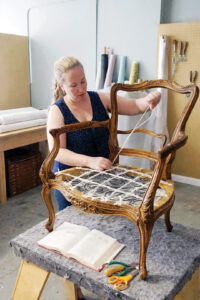
Riana LeJeune, owner of Repinned Luxury Upholstery, says she has seen an exodus in the industry.
Bread boom
Bakeries are as old as they come, but in recent years there has been a boom — and breads seem to be top of mind for many consumers.
Big Sky Bread Iowa, an Urbandale-based company that makes bread from scratch and by hand, sees this trend firsthand.
“More people are trying to get away from factory-produced products,” Amy Reynolds, co-owner of Big Sky Bread Iowa and Sibling Rivalry Granola Company, says. “For example, sourdough made from natural starter, from scratch, by hand and fewer ingredients versus instant starter made in a factory.”
Market Reports World shares the global artisan bakery market is expanding, with consumer demand growing for handcrafted, natural baked goods. In 2024-2025, more than 63% of consumers reported purchasing artisan bakery items at least twice per week, and urban micro-bakeries have grown by about 31% as demand for locally made bread increases.
Reynolds notes that while specialty bakery goods — cakes, pastries and cookies — have surged, especially in the in-home bakery space since COVID-19, brick-and-mortar bread bakeries like Big Sky face different consumer price sensitivities.
“We have noticed that people are willing to pay $12 to $15 for a loaf of bread from an in-home bakery but are more cost conscious when buying from a brick-and-mortar bakery,” Reynolds says. “That realization has led to the lesson that we just have to go with the flow. We have to be able to adapt and change as our customers’ wants change.”
 Reynolds offers practical advice for would-be bakery owners:
“It’s a lot of work, a lot of hours and a lot of sleepless nights,” she says. “We would like to encourage people to purchase from licensed, inspected, reputable businesses.”
Preserving the craft
More and more, people are looking to repurposed furniture for their homes. But, there’s a gap to fill.
Riana LeJeune — owner of Repinned Luxury Upholstery and founder of the Renewabl visualization platform — isn’t seeing more re-upholstery or custom furniture businesses opening locally. In fact, it’s the opposite.
“We’re not seeing an influx of upholsterers,” she says. “We’re seeing an exodus. The majority of professional upholsterers today are men nearing retirement age, and for decades there were almost no formal pathways into the trade. As they retire, the knowledge leaves with them.”
This reality inspired LeJeune to create the nation’s first Registered Apprenticeship for Professional Custom Upholstery in collaboration with the United States Department of Labor and the Iowa Office of Apprenticeship. In addition to her reupholstery shop, she also developed Renewabl, which earned support from VentureNet Iowa and the Iowa Economic Development Authority, to help clients visualize custom furniture and support skilled trades.
“If shops like ours don’t actively train the next generation, these skills could realistically disappear from many communities,” LeJeune says. “For us, it isn’t about competition — it’s about preservation and collaboration. Whether someone uses our shop or another qualified craftsman, what matters is that people begin thinking about the value of skilled labor and paying artisans what their expertise is worth.”
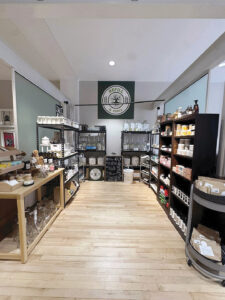
Eco-friendly refill shops such as Refill and Chill are trending.
Many customers choose restored furniture not because it’s cheaper, but because longevity and quality matter.
“Modern furniture is often built for shipping efficiency and price point rather than lifespan,” LeJeune says. “We frequently see sofas only a few years old that cannot be repaired because the frames are made from lightweight materials or engineered wood.”
In contrast, she says a solid wood frame that has already lasted 50 or 70 years offers lasting value. Proper restoration can extend that life for decades, often saving clients money over time.
LeJeune has also seen shifts in customer expectations.
“In the past, clients chose fabrics from small swatches and had to imagine the finished result,” she explains. “That uncertainty often delayed decisions. Today people expect to see the outcome first.”
Renewabl’s platform allows clients to preview their actual furniture with different fabrics and finishes before work begins, making decisions easier and boosting confidence.
Consumers increasingly want authenticity and individuality in their homes, LeJeune says, and small shops deepen the direct maker-to-customer relationship.
For those looking to enter the trade, her advice balances craftsmanship with business acumen:
“Technical skill alone isn’t enough to sustain a craft business,” she says. “Many talented craftspeople struggle not because of their ability to do the work, but because they were never taught how to lead, manage or operate a business. It’s important to have a business plan, a mentor and a long-term strategy.”
“I always encourage new craftspeople not to focus solely on becoming better upholsterers but also on becoming better leaders,” LeJeune says. “Strong leadership allows you to train others, build a team and create a business that survives beyond one person’s hands — and that’s ultimately how a craft stays alive.”
Refill and renew
Myles Barth and his wife, Katie, own Refill and Chill LLC, located at the Gray Moon Market in Newton.
Eco-friendly refill shops are trending, with several now operating in the Des Moines metro.
“We believe that whole health and the awareness of saving our health and our planet are more of a priority in the lives of others,” Barth says. “We only get one life to live, so changing the way we live will be more sustainable and promote health within the products we are applying to our bodies and lives.”
Studies show consumer demand for sustainable products is rising, with a growing share willing to pay more for eco-friendly options. Consumer surveys show most shoppers are increasingly prioritizing sustainability, with more than 70% saying they will pay higher prices for products that reduce environmental impact — a major influence on refill-focused businesses.
Barth says more awareness and education have driven shifts in expectations.
“Most consumers go to big box retails for convenience, so bringing awareness of ingredients and items we are putting on our bodies has become rewarding in educating others about our products we carry,” he says.
Barth believes reducing waste is at the heart of the movement.
“Our landfills fill up quickly, and the decomposing rate is slow for all types of plastics, which a majority of plastics can’t be recycled, so why are we making more of them? Let’s reuse the bottles and containers we have already and not continue to purchase new ones every time we need laundry soap or other products that we can refill.”
For other entrepreneurs looking to start a business that taps into eco-conscious consumer trends, Barth advises starting small, reusing what you can and educating consumers. ♦